
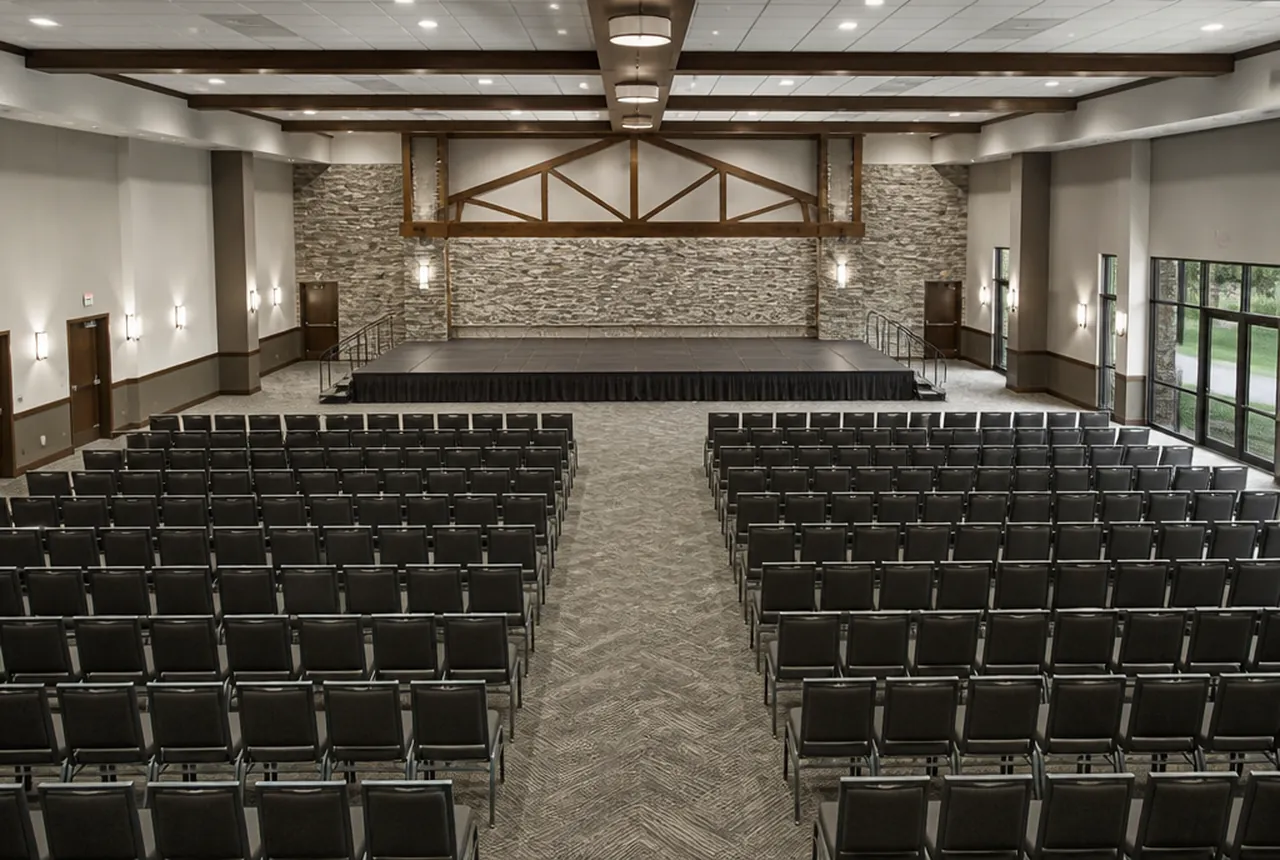
A venue can own enough chairs in total and still be short for a booking. The missing chairs may belong to the wrong presentation group, remain reserved for another room, or be awaiting acceptance during a replacement phase. Before turning an inventory total into an order quantity, allocate each compatible chair family to the rooms and times it can actually serve.
The bulk-buying guide explains the overall peak-demand calculation. This worksheet checks whether that total can be fulfilled by the right chairs, then distinguishes additions to the fleet from chairs bought to replace retiring stock.
Define the families that can fulfil each reservation
Give each usable group a family code. Base it on the accepted model/configuration and the presentation the booking requires, including whether retained and new chairs may mix within the same room. Two different covers might be acceptable together for one booking and reserved for separate rooms for another. Record that decision instead of assuming every chair is interchangeable.
Keep handling compatibility as a separate field. MityLite's cart information identifies different carts for different stacking-chair models. An accepted visual mix does not automatically permit mixed stacks, carts or accessories.
Record serviceable quantity, current location, operating status and earliest ready time for each group. A chair in a storeroom can already be reserved. A chair physically returned can still be on a cleaning or condition hold. Those are different facts.
For each recurring room setup, list the accepted family or families. Use the venue's reviewed layout and table-seating checks to establish the chair count. Inventory arithmetic does not determine legal occupancy or verify a room layout.
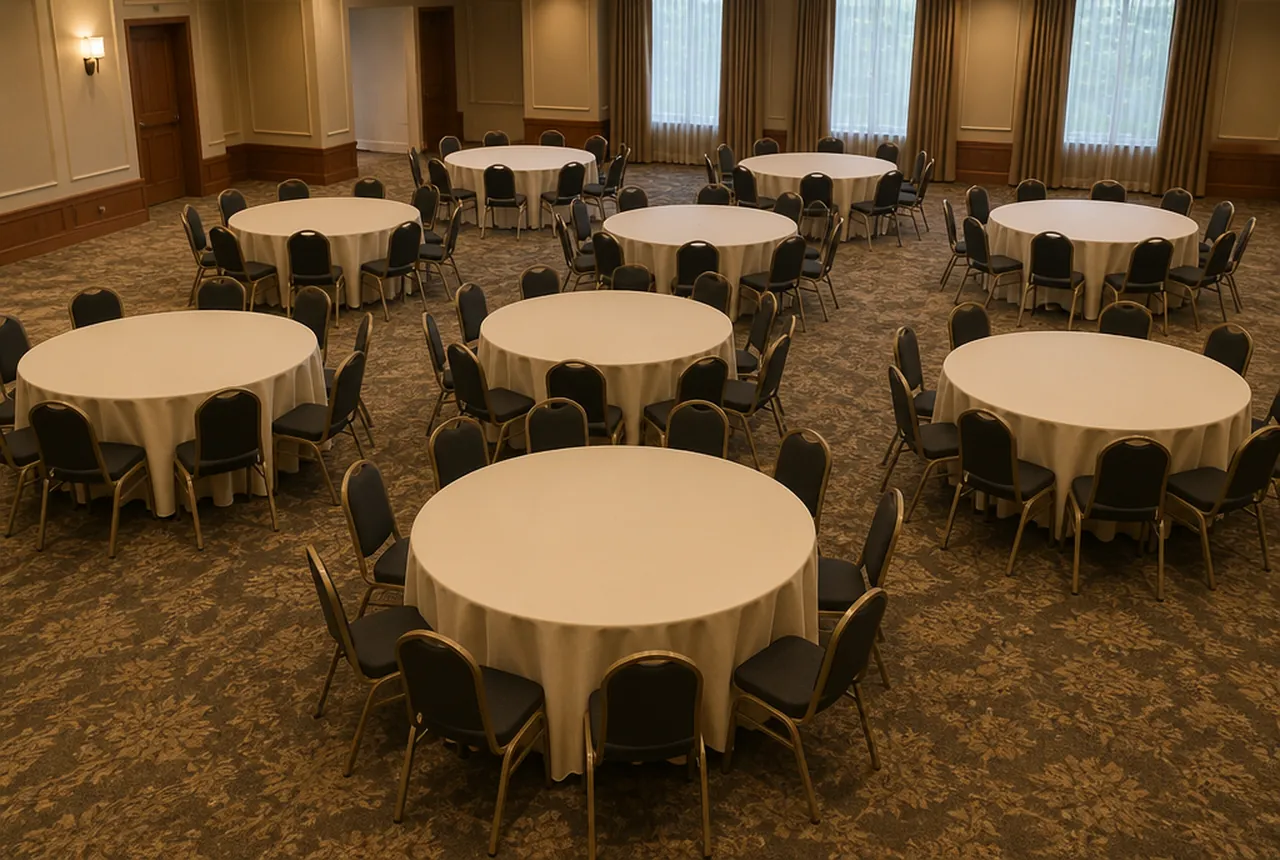
Reserve chairs from setup until confirmed release
Create a row for each room reservation, including early staging for the following day. The start is when setup needs the chairs. The end is when the count has completed return processing and can actually be allocated again.
| Reservation field | What to enter |
|---|---|
| Booking and room | Identifiable event and current room-plan version |
| Required family | Accepted group, plus any authorised alternate |
| Quantity | Reviewed arrangement's actual chair count |
| Commit time | Setup or staging start, whichever reserves stock first |
| Guest-use end | Public event end, kept separate from ready time |
| Expected ready time | Collection, cleaning, inspection and transfer completed |
| Release owner | Person who confirms the returned count and status |
Review the ledger at every start or release time that could change the overlap. Do not add alternate dinner and theatre layouts for the same room unless they actually require separate reserved sets. Do include a room staged for tomorrow while tonight's event still occupies another set.
Find the shortage that the fleet total hides
The following numbers are an illustrative allocation exercise, not a recommended venue size, reserve or event capacity. Assume the venue has 200 serviceable chairs in family A and 120 in family B. The bookings in this example have accepted those families separately; no substitution has been approved.
| At the selected overlap | Family A | Family B |
|---|---|---|
| Hall dinner already set | 180 | 0 |
| Next morning's room staged early | 40 | 0 |
| Meeting still occupying its chairs | 0 | 80 |
| Reserved chair demand | 220 | 80 |
| Separately justified family reserve | 8 | 4 |
| Family target at this overlap | 228 | 84 |
| Serviceable compatible stock | 200 | 120 |
| Shortage or unallocated balance | 28 short | 36 unallocated |
In total, the venue owns 320 chairs against a 312-chair target. That appears to leave eight chairs spare. In the actual allocation, family A is short by 28 while family B has 36 unallocated. Buying any 28 chairs will not necessarily solve it; the additional set must meet the accepted family-A requirement or an alternate must be reviewed and approved.
The reserves of eight and four are chosen inputs for this example. They are not standard percentages. Keep their reasons with the worksheet and check that the same expected hold has not been counted twice.
First test whether a genuine scheduling or specification change can close the gap. Could the early staging occur after family A is released? Would the booking accept a reviewed alternate? Record who authorises that change and its effect on operations. Spare family-B chairs do not solve the example merely because they are nearby.

Make a transfer conditional on the ready time
Treat a shared set as available only after its release is confirmed. The transfer record should include source and destination rooms, family, quantity, route, handling equipment, crew, expected ready time and the next room's setup deadline.
For a separate illustrative transfer, guest use ends at 4:40 p.m. and the next setup needs the chairs at 5:00 p.m. If the venue's observed collection, care and transfer sequence needs 30 minutes, that set is not ready until 5:10 p.m. A twenty-minute gap between event times is insufficient for this case. The 30 minutes is an example observation, not a universal turnaround allowance.
Confirm crew availability as well as elapsed time. A route can be clear while the only assigned crew is working another event. Use the staffing guide to assign the actual tasks. Keep a fallback attached to any reservation that relies on a transfer, with an owner who can act when the earlier event runs late or a returned chair is held.
Show old and new stock separately during replacement
An incoming batch needs a received-but-unaccepted column. It should not become available stock when a delivery notification arrives. Likewise, old chairs planned for retirement remain a separate group with their actual continued-use status; do not assume they can still cover bookings after withdrawal.
Continue the family-A example. Its target is 228 serviceable chairs. It currently has 200, but 12 of those accepted chairs are scheduled for retirement during the same phase. The required gross incoming batch is 40: 28 net additions plus 12 replacements, assuming all 40 new chairs become accepted members of family A.
| Phase position | Accepted old A | Accepted new A | Received, not accepted | Usable A |
|---|---|---|---|---|
| Before the phase | 200 | 0 | 0 | 200 |
| Forty arrive for inspection | 200 | 0 | 40 | 200 |
| All forty accepted, before withdrawal | 200 | 40 | 0 | 240 |
| Twelve old chairs withdrawn | 188 | 40 | 0 | 228 |
This calculation assumes the old stock is still accepted for continued use. Suspect or unsafe chairs cannot be retained to make the arithmetic work. If all 40 new chairs remain unaccepted when the 12 old chairs leave, usable A becomes 188, not 228. Revise the booking allocation or continuity arrangement before that transition.
The temporary 240-chair balance also needs a real receiving and inspection arrangement. MityLite's delivery guidance recommends planning the destination, inspection and removal of existing furniture. Confirm the actual receiving services and local plan without using the arrival date as evidence of acceptance.
Revise the quantity from the allocation decision
Keep a dated ledger issue with the accepted room plans, family permissions, reservations, ready-time assumptions and replacement gates. Recalculate when a booking moves, a trial changes the chair count, a returned set is held, or an incoming batch is accepted.
Identify each remaining shortage by family and required-ready date. Distinguish the net increase in usable stock from the gross incoming quantity that also replaces withdrawn chairs. Feed that specific result into the purchasing brief and the bulk-order process.
The allocation worksheet should let another person explain which chairs cover each booking and why a proposed addition is needed. If the answer relies on an unconfirmed transfer or an unapproved family substitution, keep that dependency visible until it is resolved.