
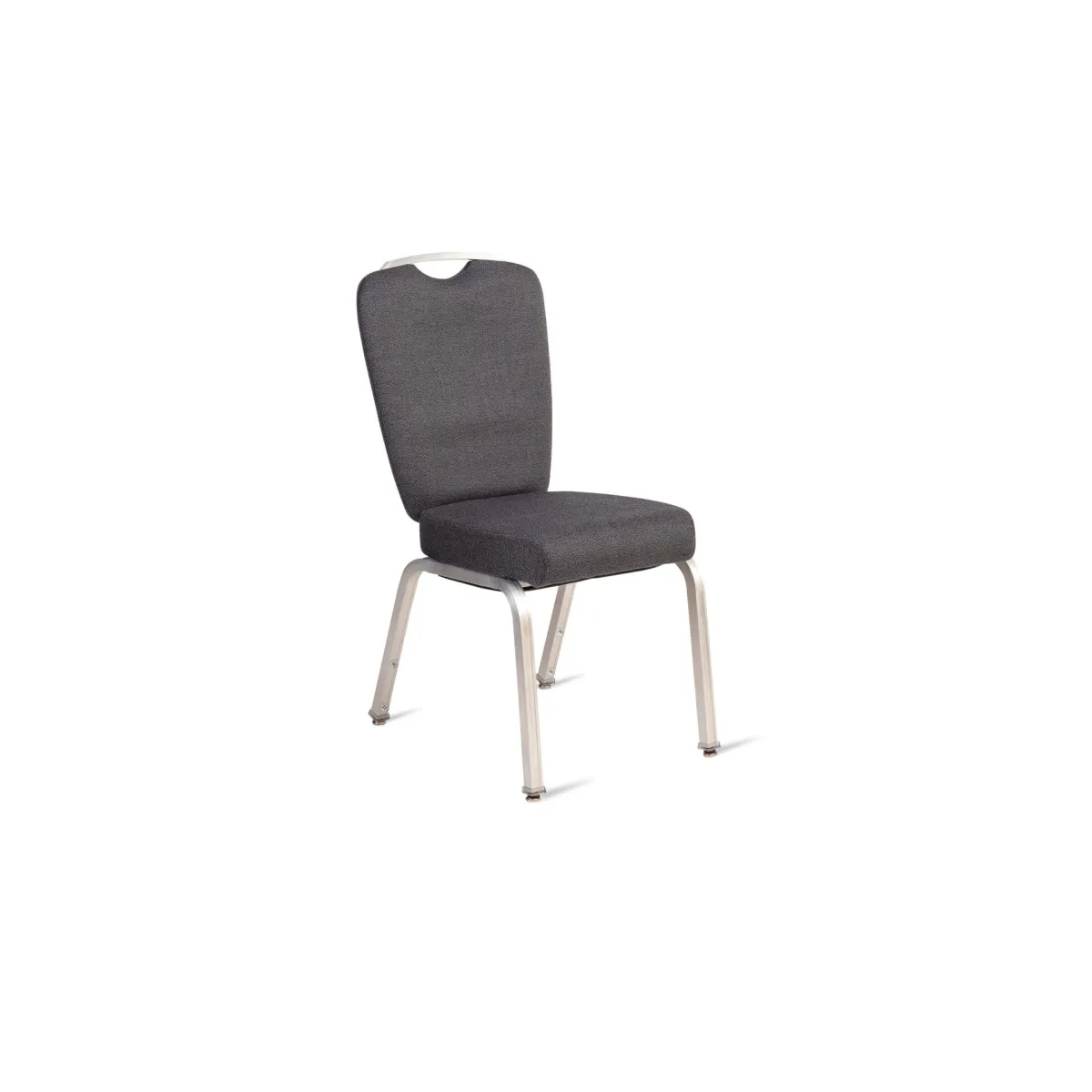
A useful banquet chair buying guide starts with the jobs your chairs must perform: seat guests at existing tables, move through the building, survive your cleaning routine, and fit the storage room. Define those requirements before choosing a finish. A short list of two or three chairs, each tested against the same written brief, gives you a much stronger purchasing decision than comparing photographs or unit prices alone.
Start with the events you actually book
List your three most common events and the most demanding one. Record seated duration, table type, room changes, meal service, and whether another room needs chairs at the same time. An occasional ceremony may need a different arrangement from the weekly dinner that drives most use.
Ask operations, housekeeping, and the person approving purchases to contribute. Their concerns become purchase requirements: a route that must remain usable, a cleaner that needs written compatibility, or a sample that must work with existing linens. Separate essential conditions from preferences so a nice finish cannot outweigh a failed table-fit test.

Build a brief a supplier can answer
Use this worksheet to replace adjectives with evidence. Leave an unknown field visibly open instead of assuming a catalog photograph answers it.
| Requirement | Evidence to collect | Decision enabled |
|---|---|---|
| Dining fit | Sample at the actual table | Suitable seat and frame dimensions |
| Room changes | Timed retrieval and return | Handling system and cart choice |
| Upholstery care | Written cleaning instructions | Compatible material selection |
| Storage | Approved stack on proposed cart | Achievable inventory capacity |
| Delivery | Written destination-specific terms | Receiving plan and total budget |
Include the venue address, desired quantity, first-use date, and sample approval contact. A supplier can then identify missing information early instead of quoting a configuration you cannot use.
Compare complete chairs in the room
Start with the banquet chair catalog, then request the seat measurements missing from overall dimensions. Overall width includes the frame; it is not the usable sitting width. Our chair dimensions guide explains what to record.
Test several samples around one fully dressed table. Include place settings and the usual centerpiece. Have staff serve and clear while people sit, stand, and pull chairs back. For a meeting-heavy venue, repeat the exercise in one of your usual room setup styles.
Write observations as specific results: “rear frame contacts table leg at this position” is useful; “feels a little awkward” needs another look. Photograph the successful arrangement and keep its chair count with the sample record.
Request documentation before scoring durability
Ask for the exact model, configuration, intended-use statement, test report references, care instructions, and warranty document. BIFMA's public and lounge seating standard includes dining and gathering settings, but a product's claimed compliance still needs identifiable evidence. BIFMA scope announcement.
Record what each document covers. A fabric test does not describe the entire chair, and a frame warranty may leave other components subject to different terms. Ask the supplier to resolve contradictory descriptions before treating a requirement as passed.
Approve the system and the quantity together
Use the banquet room planner to compare initial arrangements, then replace assumptions with your sample findings. Its illustrative seat counts do not establish room occupancy. Keep the reviewed event floor plan beside the procurement brief.
Calculate chairs needed at peak simultaneous use, add the reserve you can justify, and subtract serviceable chairs you will retain. Check that this quantity has a workable storage and retrieval arrangement. A bulk purchase creates a daily operating problem if its carts cannot turn into the storeroom.
Send an inquiry with a clear approval path
Request a quote for the preferred configuration and one meaningful alternate. State who approves the sample, what remains unverified, and the latest acceptable delivery date. Require written confirmation of substitutions before ordering.
Send the completed brief, room dimensions, table list, chair count, delivery access details, and preferred catalog models through the chair inquiry form. You should finish with a comparable proposal and an approved sample, not a collection of unresolved promises.