
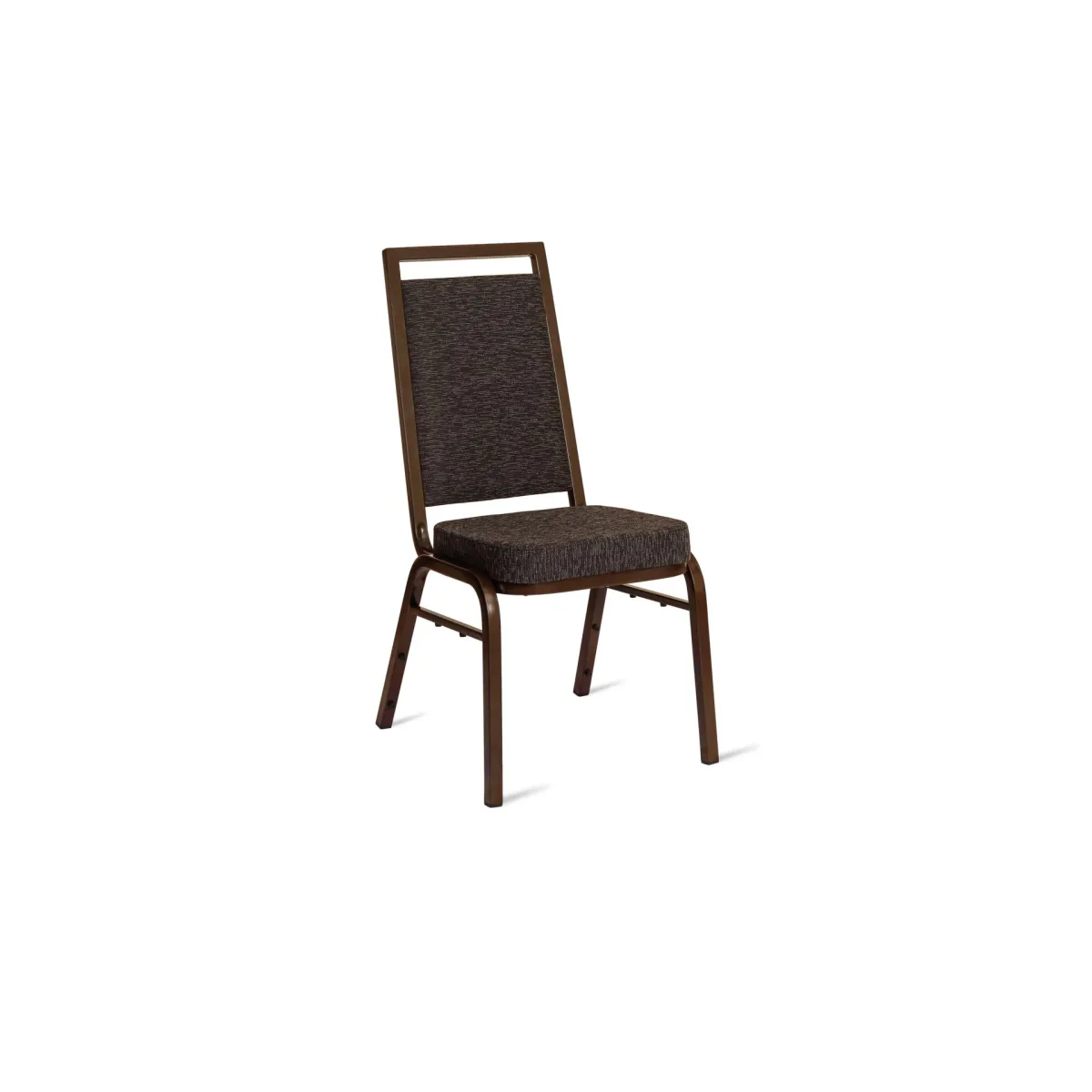
Choose upholstered banquet chairs by evaluating the complete seat and back at your actual tables. Cushion thickness and fabric appearance cannot tell you how a finished chair will feel during dinner or how easily staff can maintain it. Request a production-equivalent sample, its upholstery specification, and its care instructions. Then approve a configuration that passes sitting, service, handling, and cleaning reviews together.
Identify exactly what is upholstered
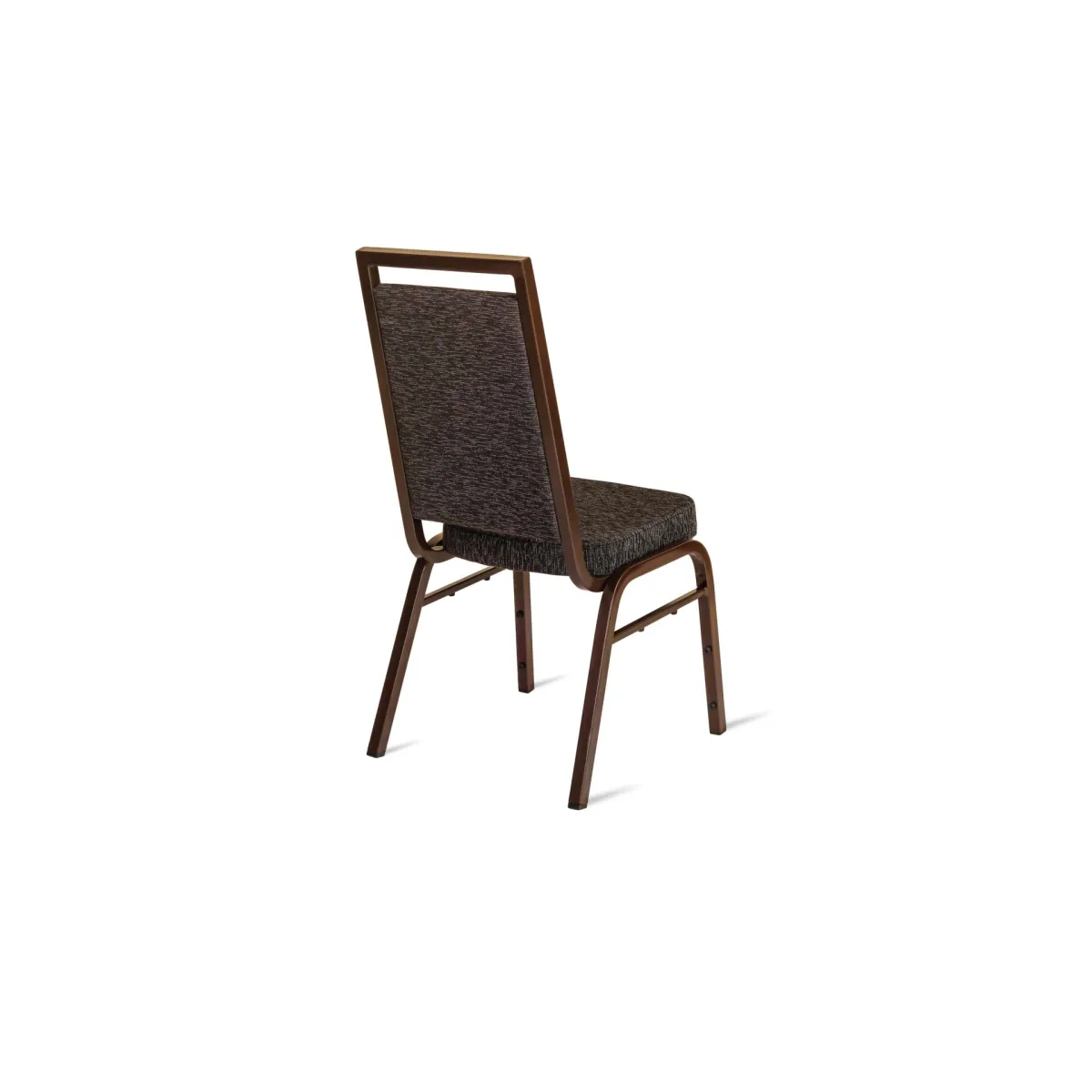
A product photograph may show the front of a padded back while leaving its rear construction unclear. Inspect the chair from every side. Record which surfaces are upholstered, where seams sit, and whether the underside has exposed edges or hardware that require further explanation.
Ask the supplier to identify the seat support, cushion construction, cover material, and attachment method in writing. Do not assume a thick cushion means greater comfort or a removable-looking panel is designed for replacement.
Start with the banquet chair catalog and narrow the list by the room's appearance and overall footprint. Keep construction questions separate until the supplier confirms them for the chosen model.
Test the seat and back as one system
Use a fully set table with the same apron, base, and tabletop height as your venue furniture. Invite several people with different preferences and body sizes, using participation and feedback voluntarily. Give each person the same tasks and time with each candidate.
Ask participants to sit for a representative portion of your event, reach for a place setting, turn to speak, stand, and sit again. For meeting use, add a normal note-taking task. The goal is to observe real use, not score a quick first impression.
| Trial observation | Record in concrete terms |
|---|---|
| Seat position | Can the person sit back without losing the preferred foot position? |
| Front edge | Any reported pressure or obstruction? |
| Back contact | Where does contact occur, and is it comfortable? |
| Table relationship | Any contact with apron, legs, or neighboring chairs? |
| Rising and sitting | Any reported difficulty or unwanted movement? |
| End-of-trial view | Would the participant choose it for the whole event? |
These are buyer observations, not medical assessments or a certification of universal comfort.
Read upholstery evidence in context
Request the exact textile identifier and supplier data sheet, not only a color name. ACT's voluntary performance guidelines vary with textile construction, application, and setting; identify the relevant category before comparing results. ACT performance guidelines.
Ask which documentation describes the cover material and which describes the assembled chair. Keep both in the approval file. If a preferred fabric is changed, repeat the relevant review instead of assuming a similar color has identical care and performance characteristics.
Check the sample's seams and fabric direction. A pattern that looks balanced on a loose swatch can appear different once cut across the seat and back. Approve the sewn sample that represents the intended production configuration.
Bring housekeeping into the sample review
Give housekeeping the manufacturer's material-specific care instructions and ask whether the routine is practical between bookings. Identify approved products, drying requirements, and any procedures that would require the chair to be unavailable for the next event.
If the supplier permits a sample cleaning exercise, use only the approved process on the agreed sample or swatch. Record the product, method, and appearance after drying. Do not improvise bleach, solvent, or abrasive treatments.
Ask how damaged upholstery is assessed and whether replacement components are available for that model. Availability, labor, shipping, and warranty treatment should be confirmed rather than inferred from how the chair is assembled.
Check room fit after the sitting trial
Transfer the measured chair footprint to your room plan. Our chair dimensions and table dimensions guides help separate overall size, usable seat space, and table-base interference.
Use the room planner for starting arrangements, then test the chosen chair at the intended count. A comfortable individual sample can still produce a crowded table when repeated around its edge. Include the actual service approach and chairs pulled back from the table.
Approve one complete upholstered configuration
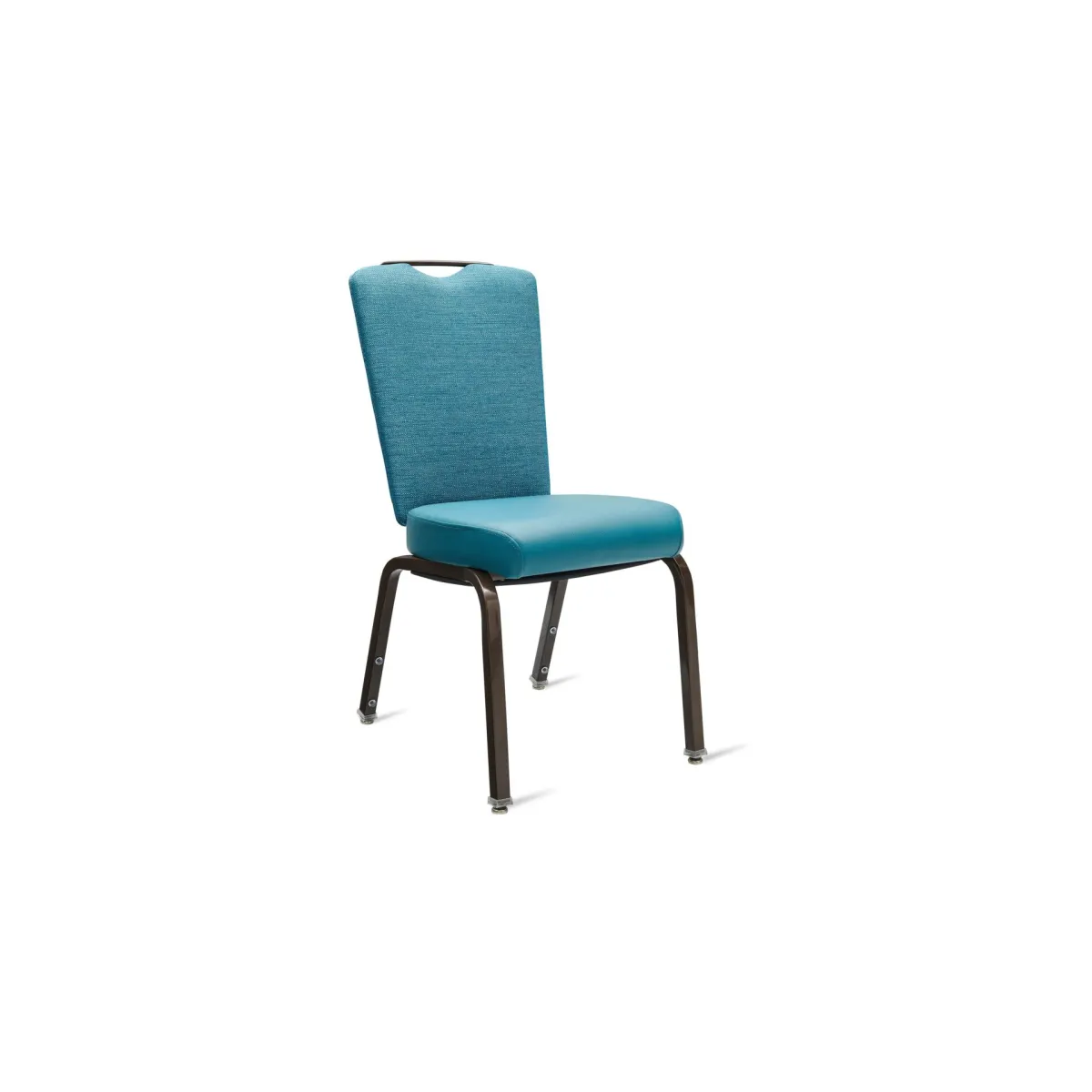
Save the model, cover identifier, color, seam layout, finish, care documents, and sample photographs together. Record any requested changes and require approval of the revised sample before those changes enter the order.
Send that record, intended quantity, main event formats, table measurements, and delivery details through the quote form. Ask for the confirmed configuration and any remaining evidence. Your approved chair should be reproducible from the paperwork, not dependent on remembering which sample felt right.