
Sizes & materials
Buying a Portable Bar: What Comes With the Unit?
Check a portable bar's ice well, cover, drain and removable rails against the quote. Keep optional backbars and required service equipment visible before ordering.
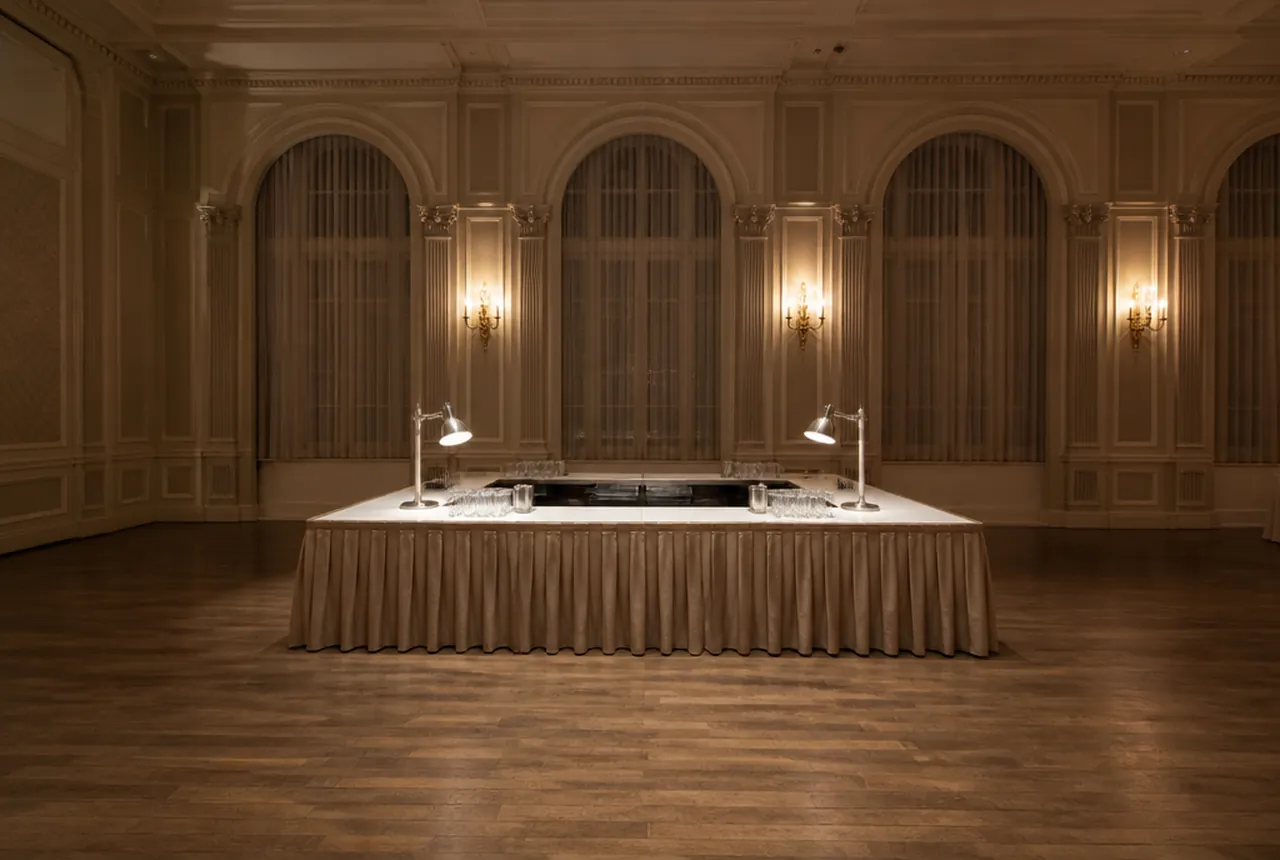
An attractive front bar and a complete working station can be different purchases. Before approving a portable bar, identify the equipment built into the quoted unit, the loose accessories supplied with it and the pieces that need another order. A photograph of a stocked bar does not tell you which of those things will arrive.
Start with the service your venue has already planned. If the station needs an ice well, bottle storage and a way to deal with meltwater, ask the supplier to show how the proposed unit provides each function. Keep unresolved utilities and service equipment visible before deciding that the bar is ready for an event.
Separate the front unit from the complete station
Give the front bar its own model and configuration on the quotation. Then list any companion backbar, loose storage, equipment or site provision separately. “Mobile bar system” needs a component list when the marketing image shows more than one piece.
MityLite's Imara Mobile Bar page, for example, identifies an insulated ice bin and two removable speed rails. It says the unit pairs with an Imara Back Bar. The backbar's own page describes four continuous stainless-steel shelves for additional storage. These are distinct products in the manufacturer's range. Confirm which ones the actual quotation includes rather than treating the paired display as a package price.
Ask the supplier to mark included components on a rear or working-side drawing. The front view may show the finish beautifully while hiding the ice well, controls, storage and any connections staff must reach.
Follow the ice well through filling and emptying
The Imara Mobile Bar brochure lists an insulated stainless-steel ice well with a cover and ball valve among its standard accessories. It gives that well's dimensions as 18 inches long, 13 inches wide and 9 inches deep. Those figures describe this model's well; they do not establish an ice quantity per event or a food-service approval.
Ask how the quoted well is filled, covered, drained and cleaned under the manufacturer's instructions. Identify any outlet fitting and any hose or collection equipment that the supplier provides. A ball valve is a component to confirm, not proof that the venue's drain arrangement is complete.
Have the responsible food-service team review the intended use and applicable sanitary requirements. An insulated ice well should not be assumed to provide refrigeration, a handwashing facility or every sink the operation needs. Keep those requirements with their actual equipment and qualified review rather than accepting the front bar as a substitute.
Name the approved emptying destination and the person who arranges it. Where a collection container or a site connection is proposed, obtain the manufacturer's requirements and the responsible team's accepted method. Do not invent a hose connection, pour route or plumbing alteration from the brochure photograph.
Count loose accessories with the bar units
Keep removable accessories identifiable. Ask for their dimensions, attachment instructions and ordering references, along with the permitted cleaning method. Confirm how the speed rails are removed, retained during a move and returned to the right bar. A missing rail can be a missing component even when the main unit arrives intact.
For a hypothetical purchase of two units with the cited standard configuration, the component count would be:
| Component | Per unit in the described configuration | Two units |
|---|---|---|
| Ice well | 1 | 2 |
| Ice-well cover | 1 | 2 |
| Ball valve | 1 | 2 |
| Removable speed rails | 2 | 4 |
This multiplies the manufacturer's described contents. It does not select the number of bars your event needs or add two backbars to the order. Get the supplier to confirm the actual counts and configuration on your quotation, including any additional accessories needed for the agreed use.
If one storage piece will serve two stations, show how staff will use it during the event. If both stations need their own storage, keep two separate requirements. Neither arrangement follows automatically from buying two front bars.
Check equipment against the actual working surfaces
Give the supplier the items that need to sit on or beneath the bar, with their dimensions and operating requirements. Identify any equipment needing power, ventilation, water or drainage. Ask whether the selected unit is intended to accommodate it and which fittings are included. An empty shelf is not permission to install an appliance.
Use the side-station guide for the broader service sequence, replenishment and active footprint. Place the confirmed bar assembly, its companion storage and its connections on the room plan, with the required access and service review.
Check the manufacturer's handling instructions before moving a stocked unit or detaching accessories. Establish which components and contents must be removed and how they are stored. Do not infer a permitted moving load or staffing method from visible casters.
Approve the complete equipment scope
Keep the supplier's confirmed included-component list beside the quotation and selected finish references. Attach the applicable operating and care instructions. Identify separate purchases and site work, their responsible people and the unresolved questions that prevent release.
At receiving, compare the delivered unit and loose accessories with that list before closing the order. Keep a missing cover or rail tied to its bar's identity and supplier response.