
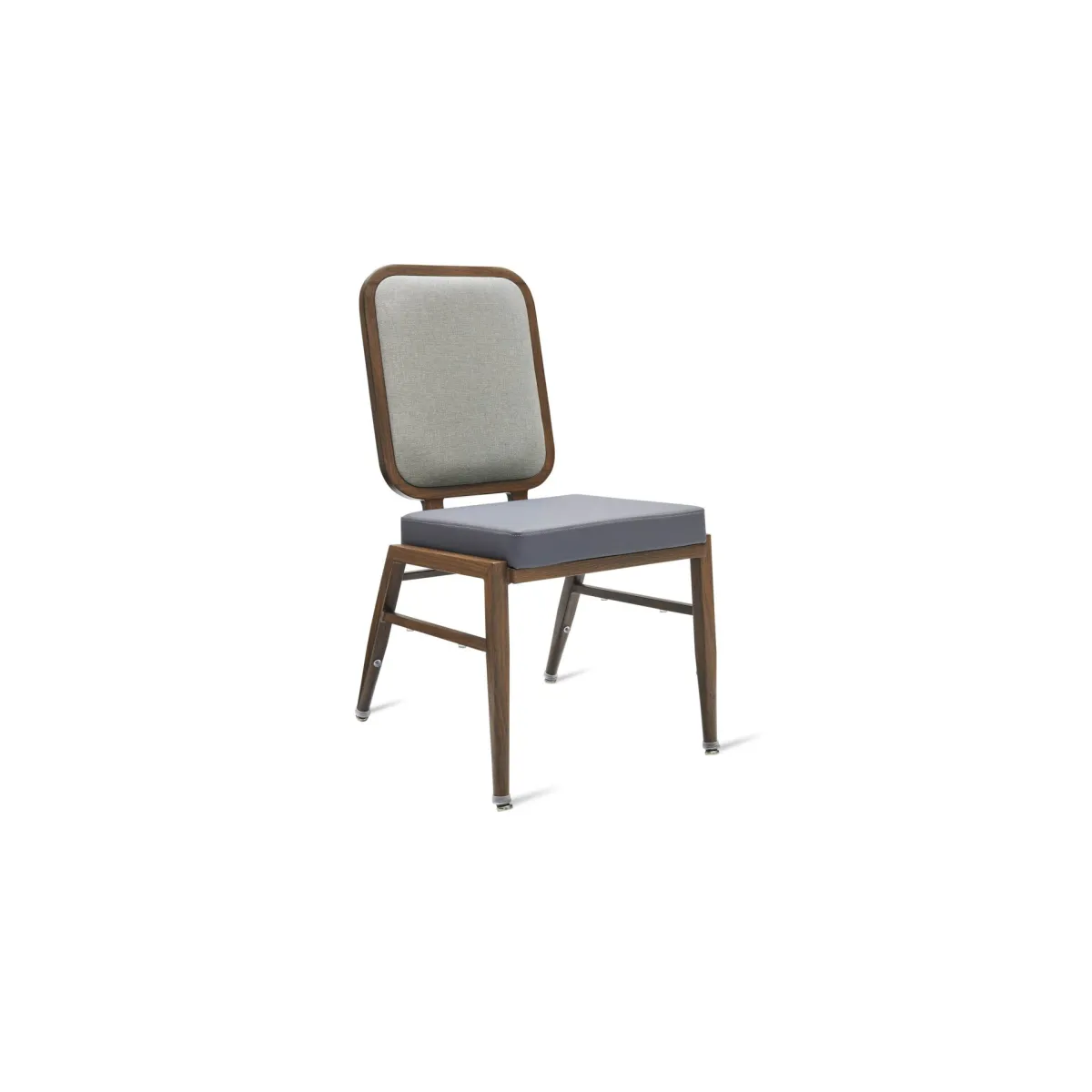
Evaluate lightweight banquet chairs by the weight of the finished model and the work required to move it through your building. A lighter chair may be useful, but handhold position, balance, stacking, and cart access can matter just as much during a room reset. Compare candidates using the same approved retrieval, placement, and return cycle. Do not convert a marketing weight claim into a universal safe lifting limit.
Weigh the configuration you would purchase
Request the finished chair weight with the selected upholstery, glides, connectors, and other attached options. Record whether the number is a published nominal weight or a measurement of the sample supplied.
If practical, weigh samples on the same suitable scale and retain the readings. A packaging weight is not a chair weight, and a bare-frame figure is not directly comparable with a fully upholstered chair.
Use the banquet chair catalog to identify candidates, then request missing weight information. Do not assign a number from another product with similar dimensions or infer the finished weight from a metal-finish description.
Map the movement before starting the trial
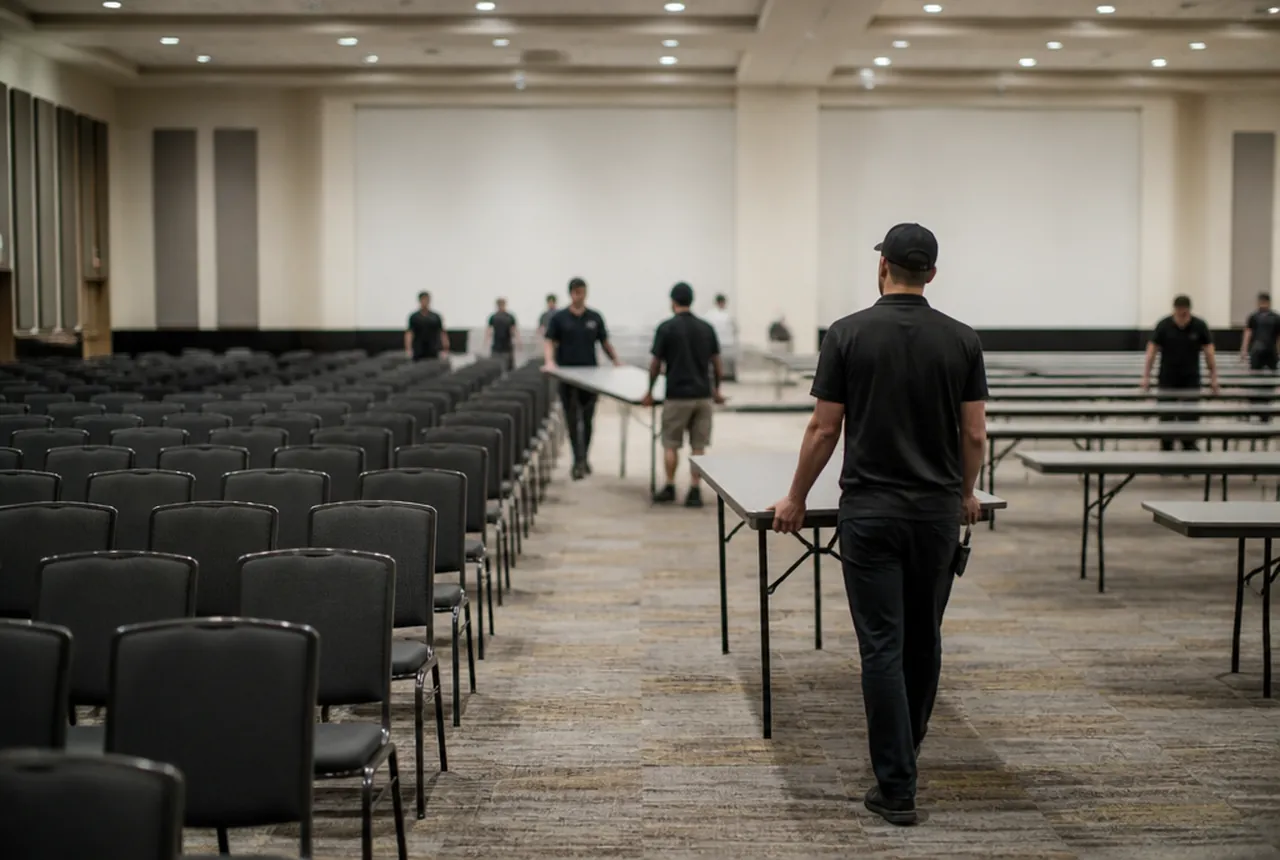
Trace the route from storage to the event room. Note the narrowest opening, turns, thresholds, changes in floor surface, elevator, and staging points. Photograph constraints and measure them for the supplier.
Identify the approved method for carrying, stacking, loading, and moving each sample. Obtain cart compatibility in writing. MityLite's cart guidance, as an external manufacturer example, describes carts engineered for particular furniture models; a cart should not be treated as universal. Manufacturer cart guidance.
Keep the exercise within normal work and manufacturer instructions. If a sample or load is awkward or unstable, stop and revise the method with the responsible supervisor rather than encouraging staff to push through.
Measure the whole cycle, including interruptions
Use the same chair quantity, route, event arrangement, and crew conditions for each candidate. Record the stages separately so a bottleneck does not disappear inside one total.
| Stage | Observation to record |
|---|---|
| Retrieve | Storage items moved and time required |
| Load | Alignment, grip access, approved stack handling |
| Travel | Trips, turns, thresholds, and waiting |
| Place | Unloading and final chair positioning |
| Collect | Inspection and sorting before return |
| Store | Reloading, travel, and final parking |
Ask staff which stage felt demanding and why. Their explanation may point to an obstructed grip, an unsuitable cart, or a storage position rather than chair weight alone. Record differences without framing the trial as a competition between workers.
Translate the trial into a purchasing comparison
Suppose your own trial shows a complete reset takes A minutes with one system and B minutes with another. The observed difference is A minus B. Multiply that difference by your actual number of comparable resets to estimate time potentially released for other work.
Keep the assumption visible. Different staffing, elevator traffic, or room layouts can change the result. Saved minutes do not automatically create a payroll saving if the same team remains scheduled.
Use the findings in your setup staffing review. Compare the chair-and-cart package price with the operational improvement you actually observed. A different cart arrangement may address more of the task than a small reduction in chair weight.
Keep guest fit and storage in the approval
Repeat the sitting and table-fit checks for every shortlisted lightweight model. Measure usable seat space and compare overall dimensions using the chair dimensions guide. Do not trade away a demonstrated guest requirement simply to reach the lowest scale reading.
Verify the approved loaded-cart height, depth, and width against the route and storage bay. Check the room clearance plan for staging conflicts. Lighter individual chairs still require a workable place to store and retrieve the complete fleet.
Ask for intended-use documentation and warranty terms independently. Weight alone does not establish either the permitted use or the expected service life.
Order against the demonstrated handling system
Write down the approved model, finished configuration, cart, stack method, and route findings. Make those items part of the request so the proposal covers the system staff tested.
Send the required quantity, sample weight readings, handling observations, route measurements, and delivery details through the quote form. Ask for written answers to any unresolved limits. You can then select lightweight seating for a measured operating benefit while keeping comfort and documented use requirements intact.