
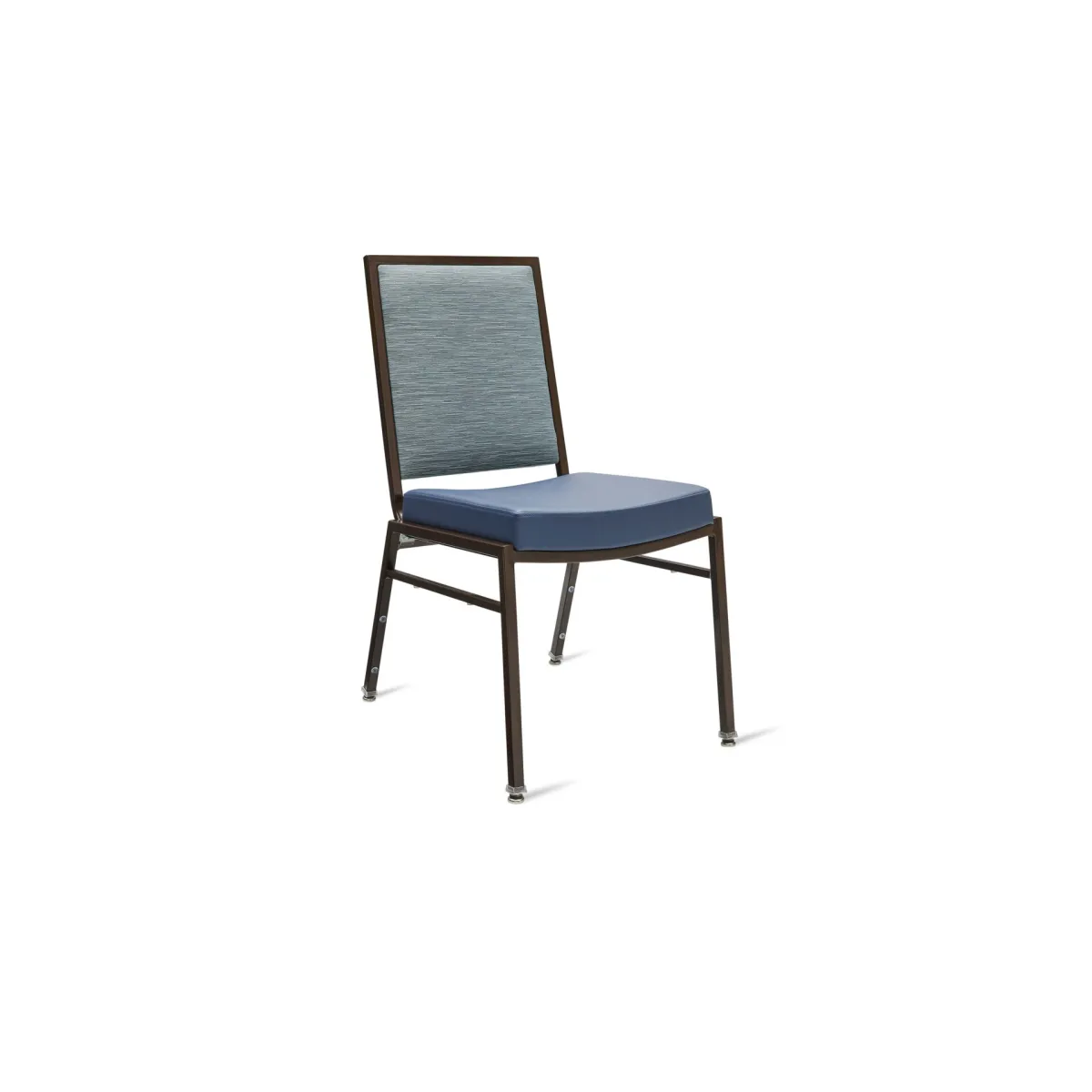
Choose between fabric vs vinyl banquet chairs using the exact upholstery materials and your venue's care routine. Compare appearance, sitting feel, approved cleaning methods, and time out of service after cleaning. Neither category automatically wins for every banquet room. A named fabric and a named vinyl, installed on otherwise comparable chairs, give you a fairer decision than broad claims about softness or wipeability.
Identify the materials before comparing them
Ask for the upholstery manufacturer's name, collection, color, construction, and care document. “Fabric” is a broad description; “vinyl-look” is not a reliable material identification. ACT distinguishes woven, knit, and coated constructions, with vinyl and polyurethane included as examples of coated surfaces. ACT textile definitions.
Keep the supplier's exact terminology on the comparison sheet. If the cover material changes after sample approval, the cleaning review should be revisited. A visually similar substitute can have different instructions.
The banquet chair catalog can help you shortlist styles, but ask which upholstery configurations are actually available for each chosen model. A material used on one catalog chair does not establish a customization option on another.

Match the comparison to your event mix
List common exposures from your own operation: meals, beverages, repeated room resets, daylight, and storage contact. Ask housekeeping which incidents consume the most time. Their records are more useful than imagining an extreme stain that rarely occurs.
For a meeting-heavy room, appearance and sitting feel across a longer session may dominate the trial. For a frequent dining turnover, approved spot treatment and drying time deserve more attention. Use your room setup styles to define representative uses.
Do not claim one material always stays cooler, cleans faster, or lasts longer. Test the specific candidates and write down the conditions so the result is repeatable.
Use a practical comparison worksheet
| Question | Fabric candidate | Vinyl candidate |
|---|---|---|
| Exact material and color | Record identifier | Record identifier |
| Appearance under venue lighting | Sample observation | Sample observation |
| Sitting feel after the same interval | Participant feedback | Participant feedback |
| Approved response to usual spills | Manufacturer instructions | Manufacturer instructions |
| Required drying and return-to-use steps | Written process | Written process |
| Compatibility with current care products | Written confirmation | Written confirmation |
| Replacement component and cost | Supplier response | Supplier response |
Treat a missing care instruction as unresolved. Do not award a cleaning advantage because a sample can be wiped with a damp cloth once; that does not establish the permitted routine for repeated commercial use.
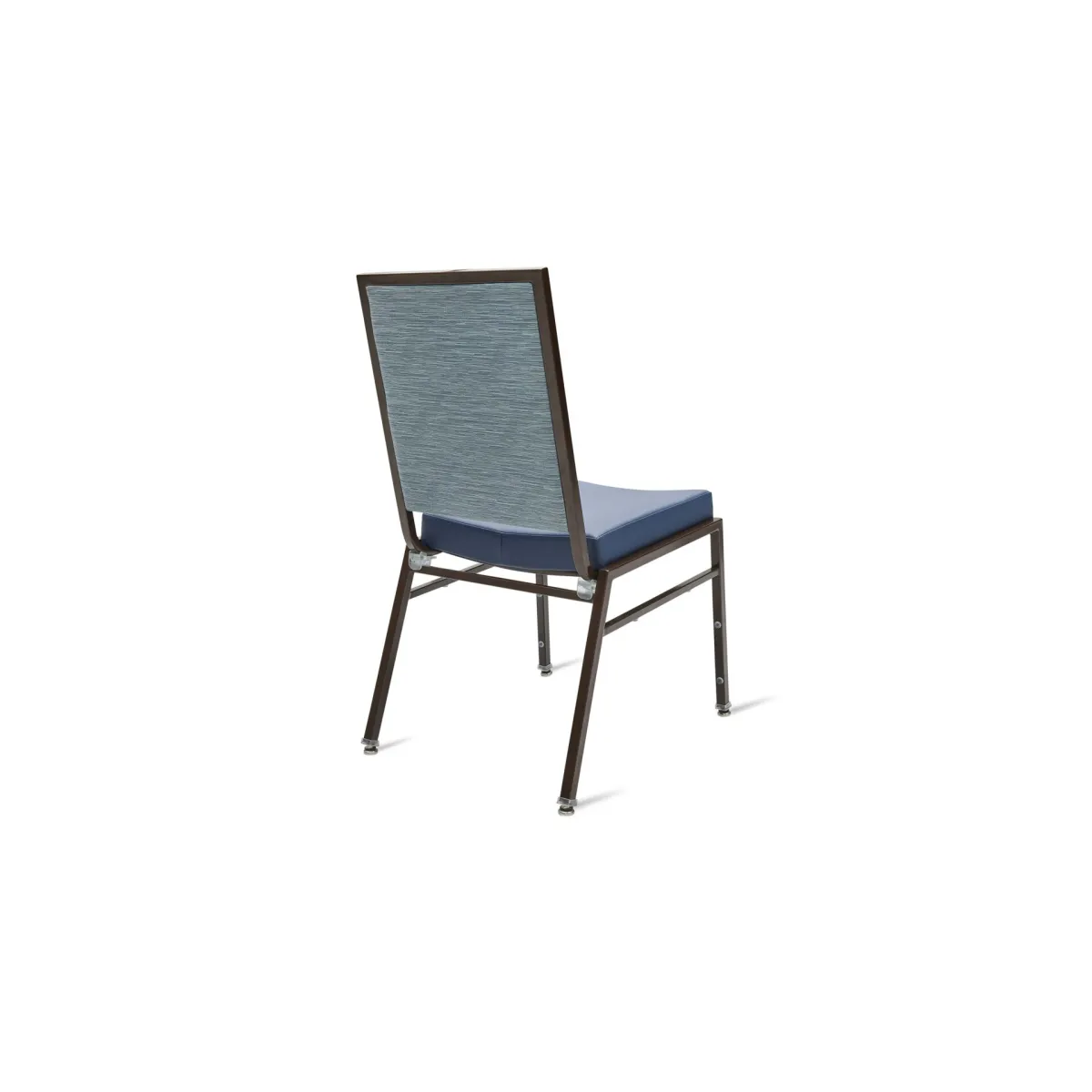
Run a controlled sample exercise
With supplier permission, compare approved cleaning procedures on swatches or designated samples. Use the same representative soil, the same observation period, and the specified method for each material. Follow the instruction for concentration, rinsing, and drying where provided.
Photograph samples before and after drying under the same lighting. Record remaining marks, changes in appearance or feel, and hands-on time. Include setup and cleanup time for any special equipment your team would need.
This is a procurement exercise, not a laboratory test or disinfection validation. Never mix cleaning chemicals or invent a stronger solution when a stain remains. Ask the material supplier for the next permitted step.
Evaluate seams, edges, and the whole chair
Look at material tension, seam position, corners, and the transition from upholstery to frame. Ask whether your chosen cover can be supplied in the approved construction and whether any pattern changes the cut layout.
Repeat the sitting test at your actual dining table. Different upholstery configurations may change the sample's feel, so use the complete chair rather than a swatch alone. Verify seat and overall dimensions with the chair measurement guide.
Have the crew stack and move samples only as permitted by the manufacturer. Note whether contact points require protective components or a different handling step with either candidate.
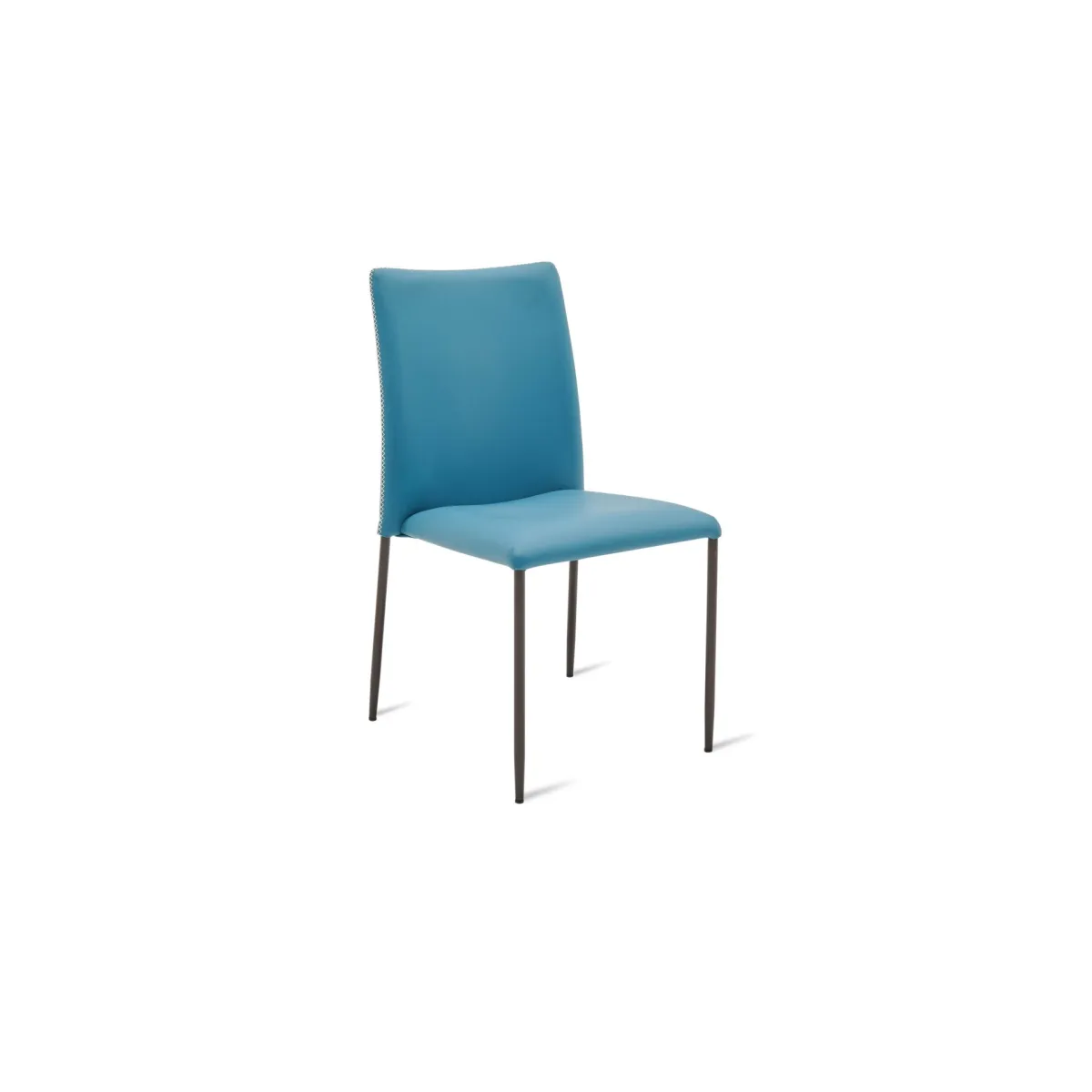
Make the material choice visible in the order
Write the decision around observed benefits and accepted tradeoffs. For example, one material may suit your approved cleaning routine better while another fits the room's visual brief. Keep both reasons explicit without turning a sample result into a universal claim.
Send preferred chair models, exact upholstery identifiers, quantities, event use, cleaning products, and trial findings through the quote form. Request confirmed availability, material-specific care documents, and complete pricing for each candidate. Approve the combination your team can maintain and your guests can use comfortably.